
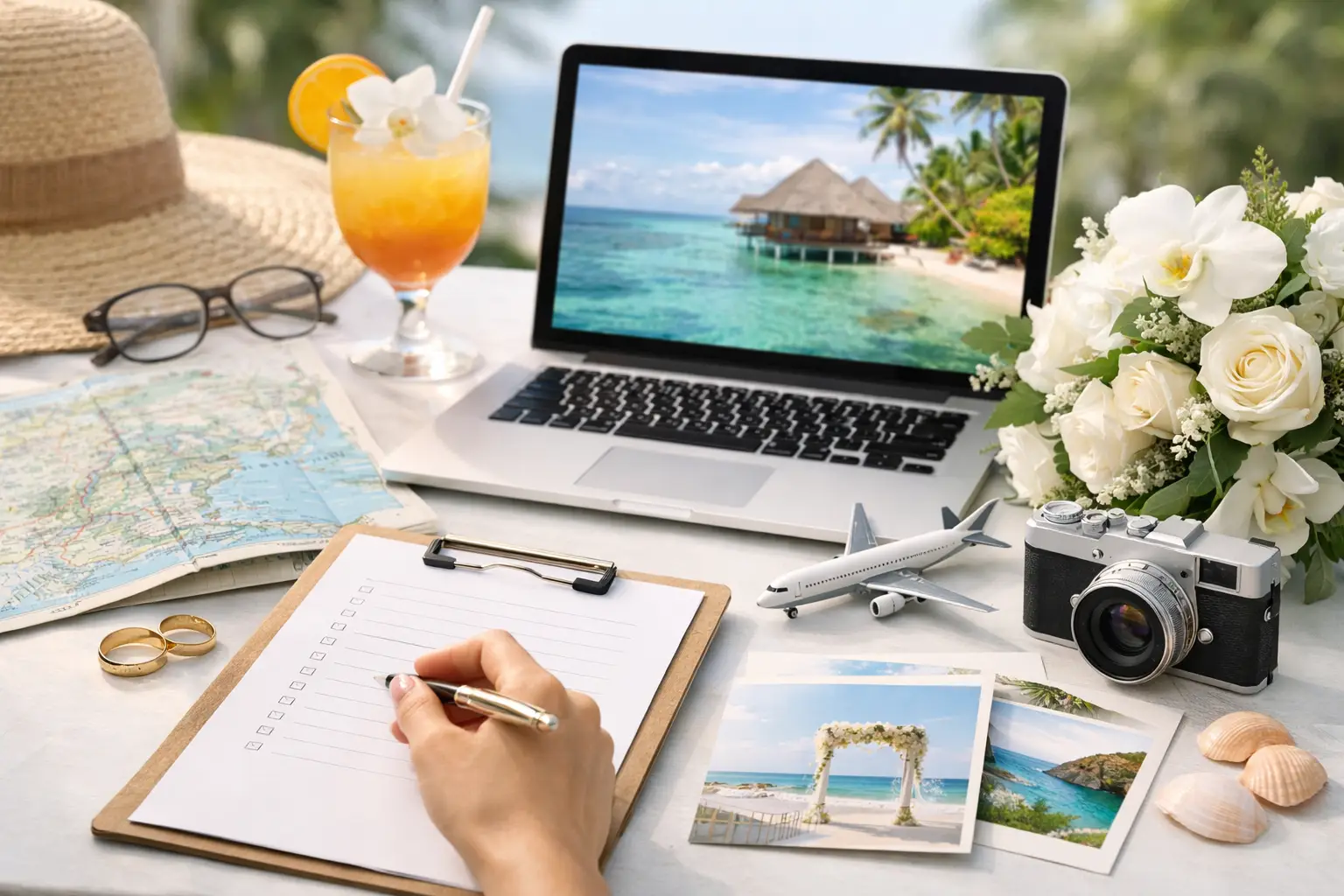
The moment most couples realize they need a real plan is not when they choose the destination. It is when the questions start piling up all at once. Which resort works for both the wedding and the guest experience? How many room nights should you hold? What happens if your closest family wants luxury, but your friends need flexible pricing? If you are wondering how to plan destination wedding celebrations without turning it into a second full-time job, the answer is simple: treat it like both a wedding and a group travel experience from day one.
A destination wedding asks you to make emotional decisions and logistical ones at the same time. That is why the process feels so different from planning a local event. You are not just choosing a ceremony backdrop. You are coordinating travel, accommodations, event timing, guest communication, and vendor reliability in a place that may not be familiar to you. The couples who enjoy the process most tend to make decisions in the right order, with enough lead time and the right support.
How to plan destination wedding decisions in the right order
The first major decision is not the color palette or even the venue style. It is the planning framework. Before you fall in love with a beachfront ceremony photo, get clear on budget, guest count, and the overall experience you want to create. A wedding for 20 guests at a private villa has a very different planning path than a 90-person celebration at an all-inclusive resort.
Start with the non-negotiables. Maybe privacy matters more than nightlife. Maybe you want adults-only luxury. Maybe easy flights from multiple US cities are essential because your guest list is spread out. These factors narrow your options faster than aesthetics alone, and they help protect your budget from expensive course corrections later.
Timing also matters more than many couples expect. Planning 12 to 18 months ahead typically gives you the best range of destinations, room categories, and wedding dates. A shorter timeline can still work, but it often requires more flexibility around day of week, resort choice, or guest availability.
Choose a destination that works for your guests too
A destination wedding should reflect your style, but it should also respect the reality of group travel. The most beautiful location in the world can become frustrating if flights are limited, transfers are complicated, or there are too few room options at different price points.
This is where nuance matters. An adults-only luxury property may feel perfect for your celebration, but it may exclude siblings with children. A remote island may be stunning, but if it requires multiple connections, attendance could drop. That does not mean you should plan around everyone else. It means the best choice is usually the one that balances your vision with a realistic guest experience.
For many couples, that balance comes down to a few practical questions. How easy is it to get there from the US? Does the property have enough inventory for your group? Are there meaningful differences in room categories so guests can choose what fits their budget? And just as important, does the destination fit the mood you want – relaxed, lively, refined, intimate, or all-out celebratory?
Budget for more than the ceremony
One of the biggest mistakes in destination wedding planning is treating the wedding package as the full cost. It rarely is. Ceremony and reception pricing are only part of the picture. Travel, room blocks, private events, décor upgrades, beauty services, photography, transportation, welcome amenities, and legal paperwork can all affect your final investment.
Guest experience costs deserve attention too. If you want to host a welcome dinner, catamaran outing, farewell brunch, or airport transfers, those choices should be accounted for early. They can absolutely be worth it. They also add up quickly, especially in luxury destinations where service standards and event minimums are higher.
There is also a trade-off between convenience and customization. Resorts with built-in wedding teams may simplify planning, but package inclusions can be limited or feel less personalized. Private venues can offer more creative freedom, though they often require more moving parts. Neither route is automatically better. It depends on how tailored you want the event to feel and how much complexity you are prepared to manage.
Build a guest list with clarity, then communicate early
Guest count influences nearly every decision that follows, from venue choice to room contracts to event flow. You do not need exact RSVPs on day one, but you do need a realistic estimate. Be honest about who is likely to travel rather than assuming every invited guest will attend.
Once your destination and date are confirmed, communication becomes one of the most valuable parts of planning. Guests need enough notice to request time off, budget for travel, and make family arrangements. Save-the-dates for destination weddings typically go out much earlier than they would for a local wedding, and details should be as clear as possible from the start.
That includes what guests are responsible for, when they should book, and how they should do it. If there is one thing that keeps group travel organized, it is having a single, reliable process rather than a dozen side conversations. Busy couples often underestimate how much time guest communication can take, especially when people have questions about passports, payment deadlines, room types, and airport transfers.
The right resort or venue does more than look beautiful
When couples shop for venues, it is easy to focus on ceremony views and reception photos. Those matter, of course. But the right property should also perform well operationally.
Ask how weddings are scheduled and how many can happen on the same day. Find out what indoor backup options actually look like, not just whether they exist. Review noise restrictions, private event timing, and what is included in standard packages versus billed as upgrades. A polished property experience is often what guests remember most, and that extends far beyond the ceremony site.
Service consistency is another major factor. A venue can photograph beautifully and still create stress if communication is slow, vendor coordination is loose, or onsite execution feels uneven. This is one reason many couples choose to work with a travel advisor who understands both hospitality standards and group logistics. With a partner like Alux Travel, the planning process can be designed around you, with one point of contact helping manage the details that often become overwhelming when handled separately.
Know the legal and logistical requirements early
Some couples want a legally recognized ceremony abroad. Others prefer to complete the legal paperwork in the US and hold a symbolic ceremony at the destination. Both are valid options, but they come with very different levels of complexity.
Legal marriage requirements can vary by country and may involve residency periods, translated documents, blood tests, witnesses, or apostilles. These details are not glamorous, but they matter. If simplicity and peace of mind are priorities, many couples choose the symbolic route and handle the legal side at home.
Travel logistics deserve the same level of attention. Passport validity rules, travel insurance, transfer times, weather patterns, and seasonal demand can all affect the experience. Hurricane season, holiday blackout dates, and spring break crowds are not automatic dealbreakers, but they should be considered before contracts are signed.
Create a wedding weekend, not just a ceremony
What makes a destination wedding memorable is rarely just the vows. It is the feeling guests have across the full experience. The welcome cocktail hour where everyone finally meets. The relaxed poolside afternoon before the big day. The final breakfast where no one is ready to leave.
That does not mean you need to over-schedule every hour. In fact, luxury often feels more thoughtful when the itinerary has breathing room. A few well-planned touchpoints can do more than a packed agenda. Focus on moments that create connection and make guests feel considered.
This is especially true if guests are investing significant time and money to attend. Small touches matter – clear arrival information, thoughtful room gifting, easy transportation, and events that feel intentional rather than obligatory. The goal is not to impress people with volume. It is to make the celebration feel polished, welcoming, and worth the trip.
Protect your time and your experience
The reason destination weddings can feel stressful is not because they are inherently harder. It is because they involve more coordination across more people, usually in a setting where you cannot easily step in and fix things yourself.
That is why support matters. Some couples enjoy being deeply involved in every choice. Others want expert recommendations and a trusted advisor to manage the moving parts. Most fall somewhere in between. The smartest planning approach is the one that protects your time, reduces friction, and leaves room for you to actually enjoy your engagement.
If you want your destination wedding to feel elevated, the planning should feel steady too. Choose the location with equal parts heart and practicality. Build the budget around the real experience, not just the headline package. Communicate clearly, decide early, and give yourself enough margin for the unexpected. When the right pieces are handled with care, your wedding becomes more than a beautiful trip. It becomes a celebration everyone can be fully present for, including you.