
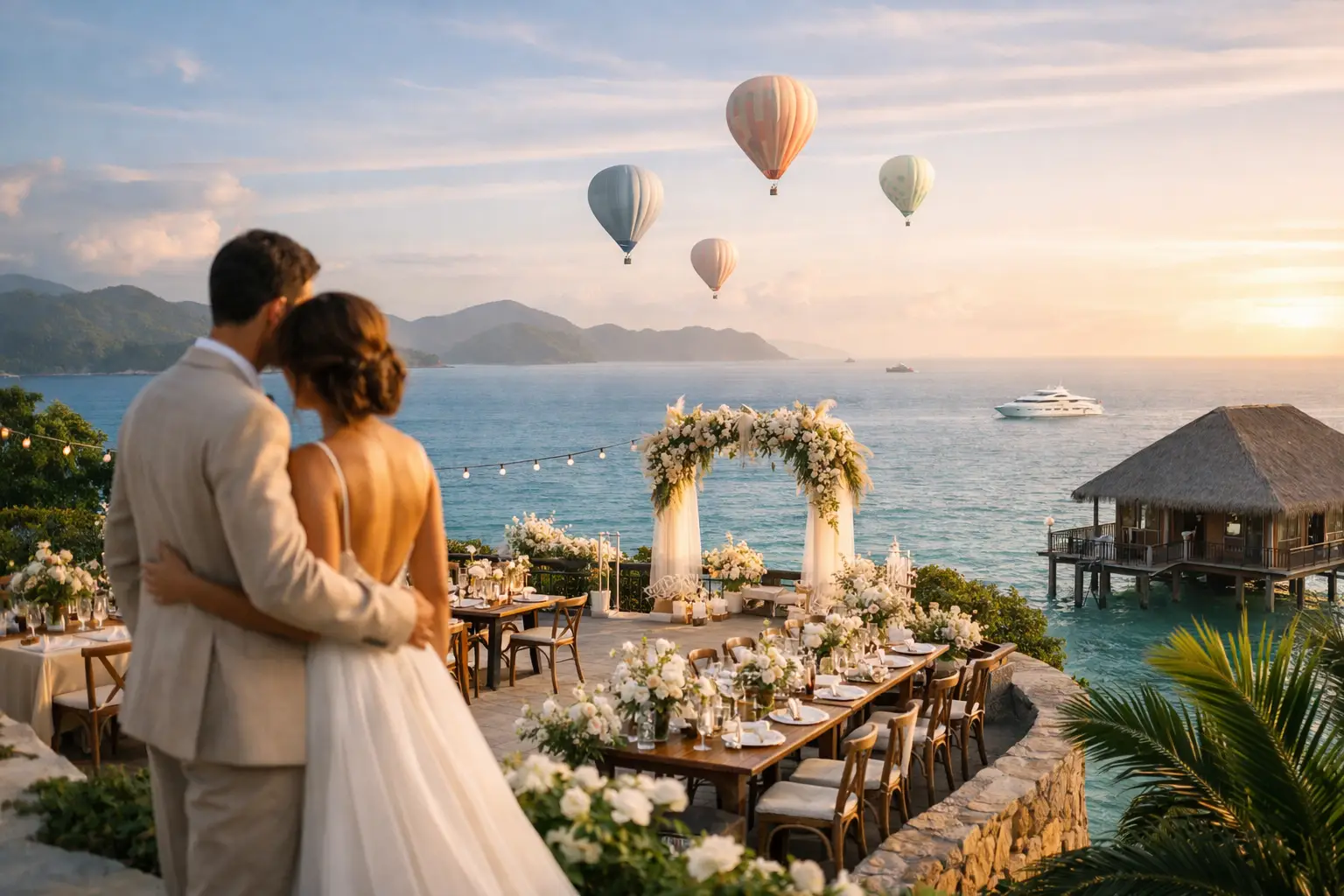
A destination wedding is no longer defined simply by a beautiful ceremony somewhere warm. The destination wedding trends 2026 couples are embracing place equal value on the experience around the vows: how guests arrive, where they gather, what feels personal, and whether the entire celebration can unfold without anyone chasing details. For couples with full lives and guests traveling from multiple cities, that level of care is becoming the true luxury.
The most compelling celebrations this year are intentional rather than overproduced. They use a destination’s character, local culture, and natural setting as part of the design, while leaving enough room for ease. Here is what that looks like in practice, along with the planning decisions that make it work.
Destination Wedding Trends 2026: More Time Together
The traditional one-day wedding format is giving way to multi-day celebrations with a gentler pace. Couples are inviting loved ones to arrive a day or two early for a welcome dinner, casual beach gathering, vineyard lunch, or private city tour. The wedding itself remains the centerpiece, but it is no longer the only meaningful moment.
This approach works especially well when guests are taking international flights or using vacation time to attend. A few thoughtfully planned touchpoints help travel feel worthwhile without filling every hour of the itinerary. The best balance is usually one hosted gathering per day, with clear recommendations for guests who want to explore independently.
Longer celebrations do require more coordination. Room blocks, airport transfers, dietary needs, activity reservations, and changing flight schedules become more complex as the guest list grows. A well-managed itinerary protects the relaxed feeling couples want by making the logistics nearly invisible to their guests.
Destinations With a Sense of Place
Rather than choosing a location solely for a dramatic backdrop, couples are choosing destinations that can tell a story. A coastal ceremony may be paired with a seafood-focused welcome dinner. A wedding in the Italian countryside might include a local olive oil tasting or a morning market visit. In Mexico or the Caribbean, locally inspired menus, music, and artisan details can add warmth without turning the celebration into a theme.
The key is restraint. One or two authentic, well-executed details often feel more elevated than a long list of destination references. A thoughtful setting also gives couples a natural design direction, which can simplify decisions about florals, color palette, menus, and events.
Accessibility still matters. A remote villa may be unforgettable, but it may not be right for a group that includes older relatives, young children, or guests with limited mobility. The right destination is one that reflects the couple while supporting the people they most want beside them.
The Rise of the Boutique Buyout
Private villas, intimate resorts, historic estates, and smaller luxury hotels remain especially attractive for couples who want their wedding to feel personal. A buyout or partially private property creates a sense that everyone is sharing the same home base, rather than dispersing after each event.
This format can make a 30- to 75-person celebration feel remarkably connected. It also offers more flexibility with event timing, private dinners, and custom touches. The trade-off is that boutique properties often have fewer rooms, firmer minimum stays, and more limited backup space for weather. Early planning is essential, particularly for peak dates.
Guest Comfort Is Part of the Design
Among the most meaningful destination wedding trends 2026 has brought forward is a stronger focus on guest experience. Couples are thinking beyond welcome bags and considering the full travel journey, from arrival instructions to departure-day plans.
Simple details carry considerable weight: a clear travel guide, transportation that is easy to find, room options at more than one price point, and a realistic schedule that accounts for heat, jet lag, and travel delays. Guests should know what to wear, when to arrive, and how to get help without needing to text the couple with every question.
For many groups, a dedicated point of contact is more valuable than an elaborate favor. When travelers have someone who can assist with flights, accommodations, transfers, and special requests, the couple can stay present for the celebration instead of becoming the unofficial travel desk.
Flexible Events Feel More Luxurious
Formal still has its place, but flexibility is increasingly part of polished hospitality. Couples are building in a little breathing room between ceremony, cocktails, and dinner. They are choosing lounge seating, shade, late-night snacks, and dress codes that suit the actual climate instead of an imagined version of it.
This does not mean the event needs to be casual. It means every choice should be comfortable as well as beautiful. A black-tie dinner on a cliffside terrace can be extraordinary, provided there is a plan for wind, temperature, footwear, and transportation after dark.
Smaller Guest Lists, Richer Experiences
Many couples are keeping guest lists more selective and directing their investment toward elevated food, meaningful entertainment, and a beautiful setting. Fewer attendees can make room for a private sailing experience, a chef-led dinner, a custom tasting menu, or upgraded accommodations for immediate family.
There is no ideal number. Some couples want 20 people around one long table, while others want 150 guests dancing at a resort ballroom. What matters is matching the scale to the experience. A smaller wedding is not automatically simpler, and a larger one is not automatically impersonal. Both can feel beautifully considered when the logistics and hospitality are designed around the group.
Personalization Moves Beyond Monograms
Personalization is becoming less about putting initials on every surface and more about creating moments that could belong only to that couple. Perhaps it is serving the dish they ordered on their first trip together, playing a family favorite during the reception, or offering an excursion that reflects the destination they fell in love with.
These choices are often the ones guests remember because they feel genuine. They also photograph well without being designed only for photographs. Couples are increasingly prioritizing documentary-style imagery and candid guest moments alongside editorial portraits, creating a wedding album that feels like a record of the weekend rather than a staged production.
More Thoughtful Choices About Season and Location
Peak-season dates continue to command premium pricing, but couples are looking more closely at shoulder seasons and less expected regions. A May celebration may offer a different value and feel than a July celebration in the same destination. Likewise, a nearby island or secondary wine region can offer stronger availability while still delivering a luxurious experience.
Weather should be assessed with realism. Hurricane season, excessive heat, rainy periods, and high winds do not always rule out a destination, but they should shape the venue selection and contingency plan. An exceptional indoor option, covered reception space, and reliable guest transportation can make the difference between a minor adjustment and a stressful event.
Budget conversations also benefit from looking beyond the venue fee. Taxes, service charges, local vendor requirements, transportation, welcome events, and group accommodations all affect the final investment. Clear priorities early on help couples spend where it matters most to them and avoid surprises later.
Planning With Confidence
The destination wedding trends that endure are not about copying a look from social media. They are about creating an experience that feels easy, personal, and well cared for from the first invitation through the trip home. That requires a destination that suits the group, trusted local partners, and a planning process that anticipates details before they become problems.
At Alux Travel, that perspective guides every celebration: thoughtful travel design, clear coordination, and support that lets couples enjoy the people and place they chose. The most memorable destination wedding will not be the one that does everything. It will be the one that makes everyone feel they were exactly where they were meant to be.