
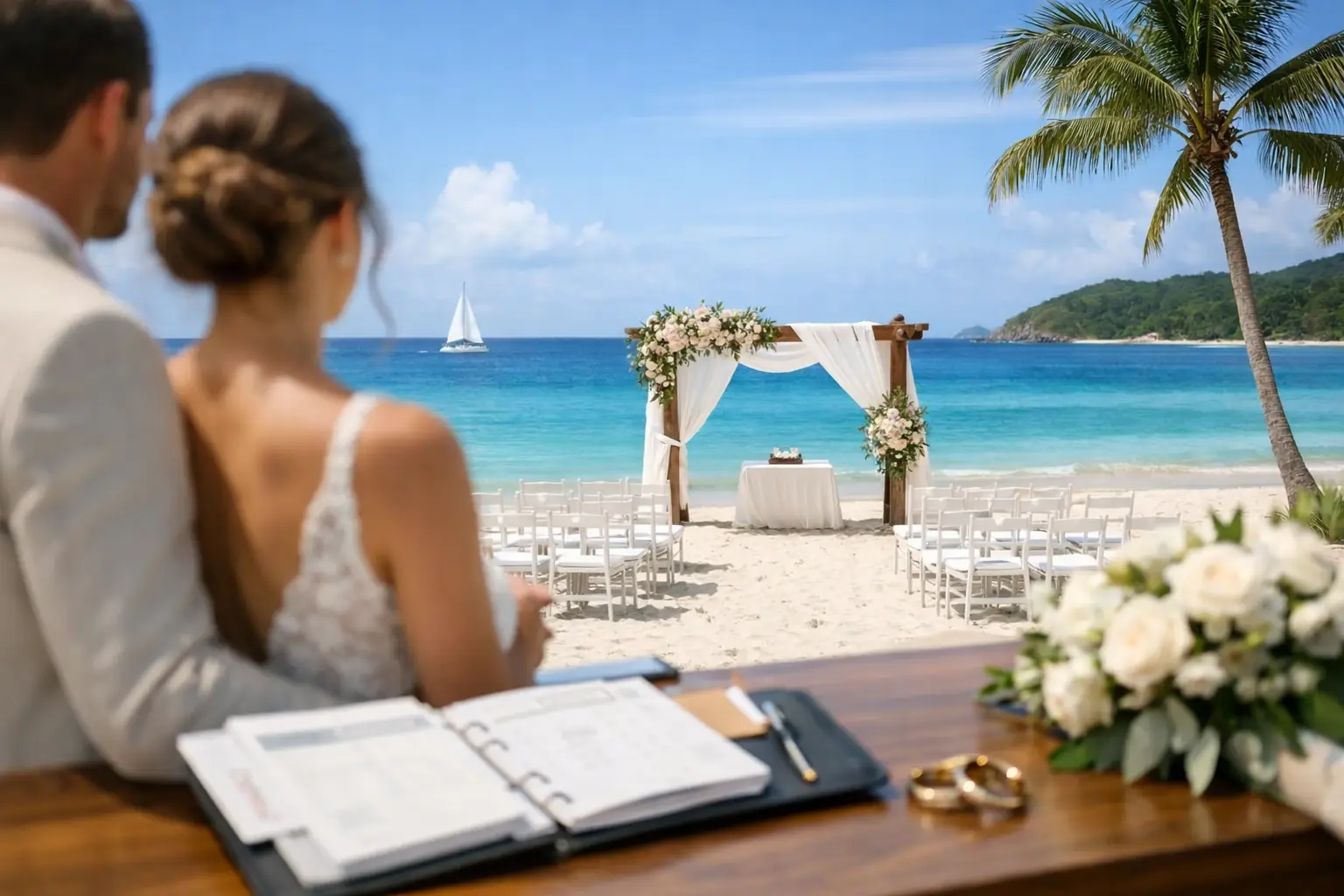
A Caribbean wedding should feel like the moment your guests step into warm air and realize they have nothing to manage but enjoying the week ahead. Yet destination weddings in the Caribbean ask couples to make a series of decisions that are easy to underestimate: which island suits the celebration, how guests will arrive, where everyone will stay, and what happens when weather or flight schedules shift.
The most memorable celebrations balance a strong sense of place with thoughtful coordination. The goal is not to fill every hour. It is to create an experience that feels beautifully considered, personal to you, and easy for the people you love to enjoy.
Why the Caribbean Works for a Wedding Celebration
The Caribbean offers something few wedding settings can match: a ceremony and a vacation in one carefully designed experience. Guests can gather for a beachfront welcome dinner, spend unstructured time by the water, and celebrate well beyond the ceremony itself. For couples, that extra time often becomes the most meaningful part of the trip.
The region also offers remarkable range. A polished resort in Turks and Caicos can feel very different from a vibrant, music-filled weekend in Jamaica or a more intimate villa celebration in St. Lucia. Some couples want a lively, all-inclusive property where every guest has options. Others prefer a secluded resort, a boutique hotel, or a private estate that keeps the group close together.
That variety is a strength, but it makes choosing well essential. The best island is not necessarily the one with the most dramatic beach photos. It is the one that fits your guest list, budget, desired atmosphere, and tolerance for travel time.
Choosing the Right Caribbean Island for Your Wedding
Start by thinking about the experience before the venue. If many guests are traveling from the United States for a long weekend, direct flights and a short airport-to-resort transfer may matter more than an ultra-remote setting. If your group includes young children, older relatives, or guests who have never traveled internationally, an easy arrival process creates immediate peace of mind.
Jamaica, the Dominican Republic, and the Bahamas can be particularly appealing for groups that value frequent flight options and a broad range of resorts. Aruba is known for its dry climate and reliable sunshine, while St. Lucia delivers dramatic landscapes and a romantic, elevated feel. Anguilla, Turks and Caicos, and the British Virgin Islands appeal to couples looking for a more refined, relaxed pace, though they may require a larger travel investment or additional connections.
There is no universal best choice. A couple hosting 80 guests with different budgets may prioritize an accessible all-inclusive resort. A smaller group of 20 may prefer the privacy and flexibility of a villa-based wedding. The setting should support the kind of gathering you want, rather than asking your guests to adapt to a beautiful but inconvenient plan.
Consider the guest experience from door to door
A destination wedding begins at the airport, not at the ceremony site. Consider flight schedules, required connections, passport needs, arrival windows, transfer times, and the availability of room categories at different price points. These details can feel administrative, but they shape whether guests arrive relaxed or depleted.
It is also wise to think through accessibility. A cliffside ceremony may be breathtaking, but uneven paths, stairs, heat, and lengthy walks can create challenges for some guests. A strong plan does not diminish the vision. It makes sure everyone invited has a comfortable way to be part of it.
Build a Wedding Weekend, Not an Overplanned Itinerary
The Caribbean naturally encourages people to slow down. Let it. Your guests do not need a packed calendar to feel welcomed. In fact, leaving room for a beach morning, a spontaneous lunch, or a quiet afternoon is part of what makes destination celebrations feel special.
A simple rhythm often works best: a welcome gathering on the first evening, free time the next day, the wedding celebration, and an optional farewell breakfast or sail. This gives the group meaningful touchpoints without turning the trip into a schedule everyone must follow.
For larger groups, optional activities can help guests connect. A catamaran outing, guided island tour, golf day, snorkeling excursion, or private dinner may be a wonderful addition, but participation should never feel required. Guests have different travel budgets, energy levels, and ideas of vacation. Offering choice is a gracious way to host.
Make the welcome feel personal
Small, intentional details set the tone long before the ceremony. A welcome note with the weekend schedule, practical local information, and a few favorite recommendations helps guests feel looked after. Consider including water for the room, a locally made treat, or a thoughtful item they can use during the stay.
The most effective welcome touches are useful rather than excessive. Guests will appreciate clear timing, transportation details, dress guidance, and a contact point for questions far more than a crowded gift bag. A well-informed guest is a relaxed guest.
Budget Beyond the Ceremony
Destination wedding budgets are often discussed in terms of flowers, photography, food, and music. Those are important, but the overall investment extends further. Couples should account for site fees, room blocks, private events, taxes and service charges, group transportation, vendor travel, welcome events, and possible weather contingencies.
Resort packages can offer clarity and convenience, especially when a wedding team handles core elements. However, a package is only valuable if it reflects your priorities. Some couples are happy with a curated set of options and the simplicity it provides. Others want a more custom design, specific culinary choices, or outside vendors. Both approaches can be exceptional, but they come with different levels of flexibility and cost.
Be transparent with guests early. Share the estimated room rates, number of nights, and major trip expenses before save-the-dates go out. Offering a range of accommodations when possible can make attendance more feasible without compromising the feeling of the event. Thoughtful communication protects relationships and avoids uncomfortable surprises later.
Plan for Weather Without Letting It Lead the Day
Caribbean weather is part of the landscape, and even the sunniest islands can have a passing shower. Hurricane season generally runs from June through November, with the highest activity typically later in that window. This does not mean a summer or fall wedding cannot be wonderful. It means the planning should be informed, flexible, and supported by realistic backup options.
Ask venues specific questions about their rain plan. Is there an indoor space that feels intentional, or is the alternative an improvised ballroom? How late can a ceremony location be changed? What happens to outdoor furniture, lighting, and music equipment if rain moves in? A polished team will answer these questions clearly and offer solutions before they are needed.
Travel insurance can also be an important consideration for both couples and guests, particularly when substantial travel costs are involved. The right coverage depends on the trip, the season, and each traveler’s needs, so it is worth reviewing options carefully rather than treating it as an afterthought.
Let One Team Own the Details
A destination wedding brings together many moving parts: resort contracts, guest reservations, airport transfers, event timelines, vendor communication, dietary needs, rooming questions, and on-island changes. When responsibility is scattered across several people, small gaps can become stressful quickly.
Working with an experienced travel advisor and wedding partners gives couples a clear point of contact and a stronger advocate throughout the process. At Alux Travel, the focus is on designing travel around the couple and their guests, while coordinating the details that make the celebration feel calm from the first invitation through the journey home.
The best support does more than make reservations. It anticipates the questions guests will ask, helps protect the group travel investment, and keeps the couple from spending the months before their wedding managing spreadsheets and logistics.
Give Your Guests a Reason to Remember the Place
A wedding weekend does not need to be extravagant to feel extraordinary. Sometimes the lasting memory is a sunset toast after the rehearsal dinner, a local musician greeting guests at the reception, or the shared quiet of breakfast overlooking the sea the morning after.
Choose details that belong to the island and to you. When the setting, hospitality, and planning all work together, the Caribbean becomes more than a backdrop for your ceremony. It becomes part of your story, giving every guest the rare gift of being fully present for the celebration.